Gameplay & Mechanics

Tactical Systems Behind Baldur's Gate 3

Field Visionary breaks down the core mechanics of Baldur's Gate 3 — a premium fantasy strategy game with deep tactical gameplay, RPG progression, and a sprawling multiplayer fantasy world. Learn how to read the battlefield, maximize every action point, and turn vision into victory.

Optimized for Hungary-based players seeking an authoritative RPG guide to fantasy strategy game mechanics, battle strategy, and competitive tactical gameplay.

Core Tactical Systems

At the heart of Baldur's Gate 3 lies a layered tactical system that blends classic turn-based structure with real-time party coordination and adaptive enemy AI. Field Visionary is built as a dedicated mechanics hub to help you understand how the game makes every square of the battlefield matter.

Turn-Based Strategy, Real-Time Decisions

Combat rounds, initiative, and off-turn reactions

Combat in Baldur's Gate 3 is strictly turn-based, but the decision pressure feels real-time. Between turns you reposition your camera, preview movement paths, queue actions, and scan the environment for hazards or opportunities.

Field Visionary explains how to balance deliberation and tempo: when to spend extra seconds planning a perfect turn and when to commit quickly to maintain momentum in multiplayer sessions.

  • Rounds governed by initiative, with clear order of play.
  • Reaction prompts (e.g., Attacks of Opportunity) acting as micro real-time decisions.
  • Environmental chain reactions that can be set up turns in advance.
Adaptive AI & Encounter Design

Encounters that react to your vision and positioning

Enemies in this fantasy strategy game are tuned to punish predictable habits. They'll focus fire low-armor targets, push heroes off ledges, detonate explosive barrels, and abuse visibility just like a human strategist would.

Our mechanics breakdown shows how enemy behaviors are informed by line-of-sight, crowd control, and threat evaluation, and how you can use that knowledge to bait, misdirect, and control the flow of every engagement.

See practical battle strategy examples

Action Point Economy

Every turn in Baldur's Gate 3 is a miniature resource puzzle. Movement, attacks, spells, jumps, shoves, and interactions all consume discrete action resources. Mastering this economy is the foundation of advanced tactical gameplay.

Action, Bonus Action, Movement

The game splits your turn into Action, Bonus Action, and Movement. Optimal combat revolves around sequencing these pieces so that no part of your turn is wasted.

  • Action: main attacks, heavy spells, interactions.
  • Bonus Action: light abilities, off-hand attacks, utility skills.
  • Movement: distance you can travel before your turn ends.

Efficiency Patterns

Field Visionary teaches reusable patterns for AP efficiency that apply across classes and builds.

  • Move after attacking to break line-of-sight and avoid counterfire.
  • Convert redundant movement into positioning advantages (high ground, cover, flanking).
  • Reserve bonus actions for mobility or control, not just extra damage.

Advanced Turn Tech

Once you're comfortable with the basics, you can exploit AP interactions for sophisticated battle strategy.

  • Chaining jumps and dashes for extended engagement ranges.
  • Using throw and shove to reposition enemies without spending extra attacks.
  • Sequencing crowd control before damage to deny enemy turns entirely.
Explore class-specific AP synergies

Vision & Fog of War

Vision is the defining mechanic behind the Field Visionary concept. Baldur's Gate 3 uses line-of-sight, elevation, and stealth to shape what you can see and, more importantly, what you cannot see.

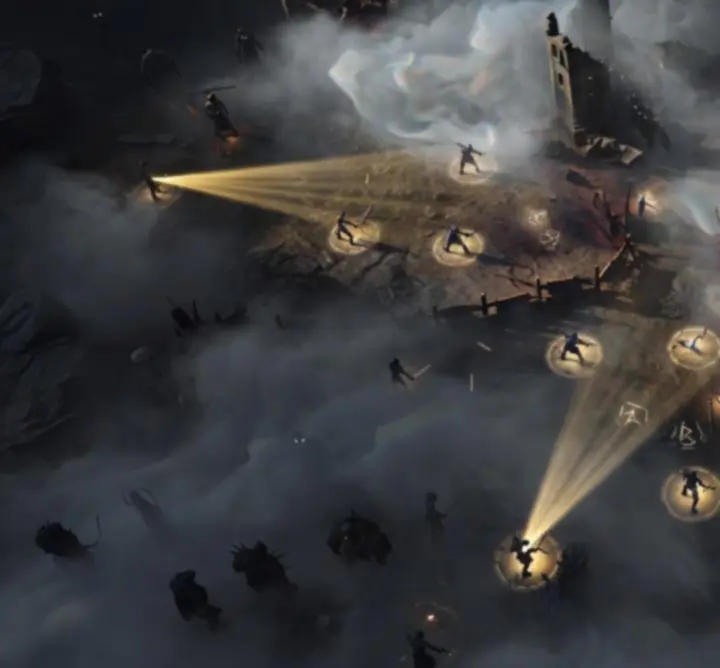
Fog of war hides enemy positions, traps, and patrol routes until your party gains visibility. Stealth characters, summoned familiars, and high-ground scouts act as your extended eyes, letting you map the battlefield before you commit.

  • Line-of-sight cones determine who can be targeted, buffed, or protected.
  • Elevation offers accuracy and damage bonuses, but reveals your position.
  • Light and darkness influence hit chances and stealth detection.

Our Hungary-focused RPG guide walks you through vision-based openings: pulling single targets from a large group, setting perfect ambushes, or bypassing entire encounters to preserve resources for pivotal boss fights.

Learn vision paths on key maps
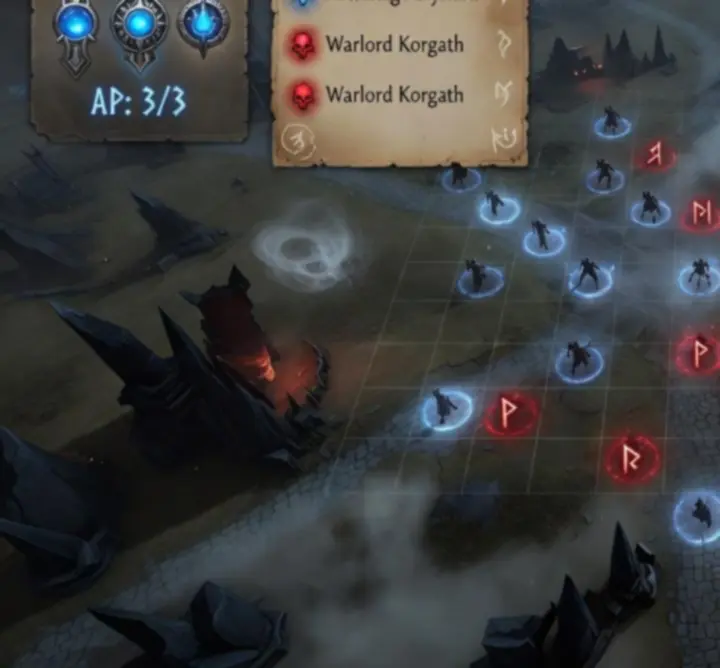
Tactical user interface highlighting fog of war and line-of-sight vision cones on a fantasy battlefield
Fog of war and line-of-sight define safe and dangerous zones long before the first spell is cast.
Dark fantasy battlefield with magical terrain, hazards, and elevation differences
Magical terrain, verticality, and hazards turn every combat arena into a tactical puzzle.

Battlefield Environments

Baldur's Gate 3 elevates the fantasy strategy game formula by making the battlefield itself a weapon. Surfaces, elevations, and interactive objects change the balance of power turn by turn.

Elemental Surfaces

Fire, ice, acid, poison, and holy light create zones of control and denial. Clever spell placement can lock enemies out of key chokepoints, while forced movement can throw them directly into hazards.

  • Use oil and grease to set up amplified fire damage.
  • Combine water and lightning for devastating crowd control.
  • Cleanse or corrupt zones with radiant or necrotic magic.

Vertical & Structural Play

High ground offers powerful offensive advantages, but also makes you a prime target. Collapsing bridges, breaking platforms, and shoving foes from cliffs provide cinematic, resource-efficient kills.

Field Visionary maps out priority terrain on key encounter spaces, helping you plan aggressive openings that feel like competitive tactics rather than random chaos.

See how environments support tactical gameplay

Positioning & Zone Control

Positioning is where Baldur's Gate 3 truly earns the Field Visionary title. Every tile, angle, and distance can create an advantage if you know how to use it.

Defensive Lines & Chokepoints

Forming a tight front line in doorways, bridges, or tunnels limits how many enemies can engage you at once. Tanks and durable melee classes hold the line while ranged allies rain damage from safety.

  • Stack armor and defensive buffs on front-line heroes.
  • Use terrain to block flanking routes.
  • Drop traps in the only remaining path around your formation.

Offensive Flanks & Encirclement

Flanking, high ground, and backline dives turn static lines into dynamic battlefield plays. Rogues, monks, and mobile casters excel at punishing exposed supports or artillery units.

Our battle strategy diagrams show how to collapse formations from multiple angles without overextending.

Zone Control Tools

Spells, surfaces, and summoned creatures create virtual walls that segment the field.

  • Slow and root effects to freeze enemy pushes.
  • Summons to physically block lanes and soak hits.
  • Threatening areas that force opponents into predictable paths.
Study Field Visionary positioning playbooks

Status Effects & Combos

Status conditions turn simple damage races into complex tactical puzzles. Properly layered, they allow a smaller party to dismantle larger forces with surgical precision.

Field Visionary categorizes statuses into control, vulnerability, resource denial, and mobility manipulation. Understanding these categories is crucial for building effective party compositions.

  • Control: stun, sleep, hold, fear — remove targets from the fight.
  • Vulnerability: debuffs that increase incoming damage or lower resistances.
  • Resource denial: silence, disarm, or spells that burn spell slots and abilities.
  • Mobility: slow, root, and knockdown effects reshaping front lines.

Combo play is where Baldur's Gate 3 feels like a competitive tactical game. Freeze enemies on a slick surface, then shatter them with blunt force; drench foes before sending a lightning bolt; apply fear to push them into environmental hazards.

Designing Combo-Oriented Parties

Instead of stacking raw damage dealers, Field Visionary recommends building combo engines for your Hungary-based co-op group:

  • One hero specializes in setting up surfaces and control zones.
  • Another focuses on detonating or exploiting those setups.
  • Support classes maintain buffs, cleanses, and emergency rescues.
Match classes to combo roles

Skill Trees & Character Progression

Baldur's Gate 3 uses a robust RPG progression system that transforms basic adventurers into specialized tactical tools. Every level gained is also a shift in your available battlefield options.

Core Archetypes

Each class offers a baseline toolkit — damage, control, support, or hybrid capabilities. Subclasses then refine that kit into more specialized roles like battlefield controllers, burst assassins, or resilient front-line commanders.

Field Visionary guides explain how to align archetypes with your preferred fantasy strategy playstyle: methodical control, explosive aggression, or adaptive hybrid tactics.

Synergy-Driven Builds

Rather than chasing isolated "best" talents, we focus on synergy clusters:

  • Talents that reinforce a core combo (e.g., critical hits + sneak attack).
  • Feats that unlock new positioning or vision tools.
  • Spell picks that fill holes in your party's control grid.

Late-Game Tactical Roles

In the late game, parties evolve into tightly defined tactical machines. One hero may become a dedicated battlefield architect, another a pure executioner, and a third a failsafe support.

Our progression roadmaps help Hungary-based players plan from level 1 to endgame without wasting key picks.

Share and compare builds with the community

Initiative & Turn Order

Speed and initiative dictate who acts first, who reacts, and who is eliminated before they can respond. In a turn-based fantasy strategy game, manipulating turn order can be more powerful than any single high-damage spell.

We break down how initiative is rolled, how bonuses from feats and class features apply, and how certain abilities can effectively skip enemy turns through stun, hold, or forced movement.

  • Front-loading control casters early in the order to shut down priority targets.
  • Delaying certain heroes to capitalize on allies' setups.
  • Using reactions and ready actions to blur the boundaries of strict turn order.

Tempo Control Playstyles

Field Visionary introduces the concept of tempo control: instead of simply dealing damage, you focus on dictating when everyone gets to act.

This competitive-minded approach is especially valuable for co-op groups in Hungary who want their runs to feel like carefully orchestrated tactical operations.

Study initiative-based tactics

Resource Management & Cooldowns

Beyond action points, successful Baldur's Gate 3 play comes down to long-horizon resource planning: spell slots, class charges, hit points, consumables, and cooldown-based abilities.

Mana, Stamina & Class Charges

While the game follows tabletop-inspired spell slot logic rather than a classic mana bar, the principle is the same: your most powerful options are limited and precious. Stamina-like resources and per-rest abilities must be carefully rationed across dungeons.

Cooldown Mapping

Tracking when key abilities will be available again is essential in boss fights. Field Visionary encourages creating a mental or physical cooldown map so your team can rotate defensive and offensive spikes instead of overlapping them wastefully.

  • Alternate big cooldowns between party members.
  • Use low-cost cantrips and basic attacks to bridge gaps.
  • Plan rests around upcoming high-threat encounters.

Strategic Consumable Use

Potions, scrolls, and special arrows often decide close fights. Treat them as part of your core toolkit, not emergency-only options.

Our mechanics and strategy guides suggest threshold rules: when health falls below a specific percentage, when to invest scrolls, and when to preserve items for later acts.

Watch balance changes that affect resources

Why Baldur's Gate 3 Embodies the Field Visionary Concept

Field Visionary is more than a name — it's a philosophy of play. Baldur's Gate 3 is the ideal fantasy strategy game to anchor this hub because its design constantly rewards awareness, foresight, and strategic vision.

  • Battlefield Awareness: success depends on reading terrain, elevations, and hazards at a glance.
  • Vision Management: fog of war, stealth, and lighting make scouting just as important as damage.
  • Positional Mastery: every encounter can be reshaped through vertical play and choke control.
  • Predictive Thinking: anticipating AI behavior, turn order, and resource drains is vital.
  • Team-Based Synergy: coordinated abilities and status combos make co-op parties feel like elite tactical squads.

For Hungary-based players seeking a serious but accessible RPG guide, Field Visionary turns Baldur's Gate 3 into a training ground for advanced tactical thinking in a rich multiplayer fantasy world.

Strategic tactical user interface showing character abilities, initiative, and battlefield overview in a fantasy RPG
The user interface makes it possible to read the battle at a glance — Field Visionary teaches you how to interpret and exploit every detail.

Next Steps in Your Tactical Journey

Mechanics knowledge is the starting line, not the finish. Turn theory into on-field mastery with focused guides, map breakdowns, and class synergies.

1. Study the Battlefield

Dive into detailed map and exploration write-ups to see how vision and terrain combine in real encounters.

Go to Maps & Exploration

2. Refine Your Party

Match mechanics with class kits to create specialized tactical roles that feel powerful and thematic.

View Classes / Characters

3. Apply Competitive Tactics

Use Field Visionary's strategy frameworks to bring tournament-like discipline to your co-op runs and hardest battles.

Open Strategy Guides