Competitive Guides for Hungary Players

Strategy Command for the Fantasy Battlefield

Elevate your tactical gameplay in our multiplayer fantasy world. Learn how vision, positioning, and resource discipline turn every skirmish into a calculated victory.

Optimized for Hungary: fantasy strategy game tactics, tactical gameplay fundamentals, RPG guide depth, competitive battle strategy, multiplayer fantasy world coordination, and practical game tips.

Why Strategy Defines a True Field Visionary

Field Visionary is a hub for players who treat every match in this fantasy strategy game as a tactical puzzle. Instead of relying on reaction speed alone, you will learn to read the map, measure risk, and orchestrate allies into coordinated, winning plays.

These RPG guide sections are structured for both ambitious students of tactics and experienced professionals who want deeper insight into battle strategy, fog of war, and strategic vision across the entire multiplayer fantasy world.

The Field Visionary Concept

Being a Field Visionary means seeing more than your opponents: predicting flanks before they happen, holding vision over critical objectives, and managing mana, stamina, and morale with ruthless efficiency.

On this page, you will move from fundamentals like tactical positioning and resource management to advanced concepts such as dynamic adaptation, terrain exploitation, and region-specific competitive strategies tuned for Hungary’s meta.

Mastering Tactical Positioning

Discover how advanced spatial awareness, zone control, and unit placement decide every engagement in this fantasy strategy game.

Core Discipline Lane & Objective Play

Zone Control, Choke Points & Advantage Lines

Turn neutral ground into a calculated kill zone.

Strong positioning is less about standing still in the “right spot” and more about controlling where opponents are allowed to stand. Visualize every lane, ramp, and forest as overlapping influence zones. Whoever dictates these zones dictates the fight.

Zone control means forcing enemies to enter areas where your team already has vision, terrain advantage, and spell coverage. In Hungary’s competitive lobbies, teams will frequently set up layered zones: long-range control on entry, burst damage in the center, and disengage paths at the back.

  • Choke points: Fight where the map narrows. Melee-heavy squads thrive in tight gaps; ranged comps prefer wide, open firing lines.
  • High ground: Prioritize ledges, ramps, and elevated platforms that extend vision range and limit enemy approach angles.
  • Escape vectors: Before committing, identify at least two safe retreat paths that are not covered by enemy control effects.

Positioning is also temporal. Arrive early to an objective, set your frontline on the edges of your damage radius, and hold your backline far enough to stay safe while still impacting the fight. This is what separates casual play from true battle strategy.
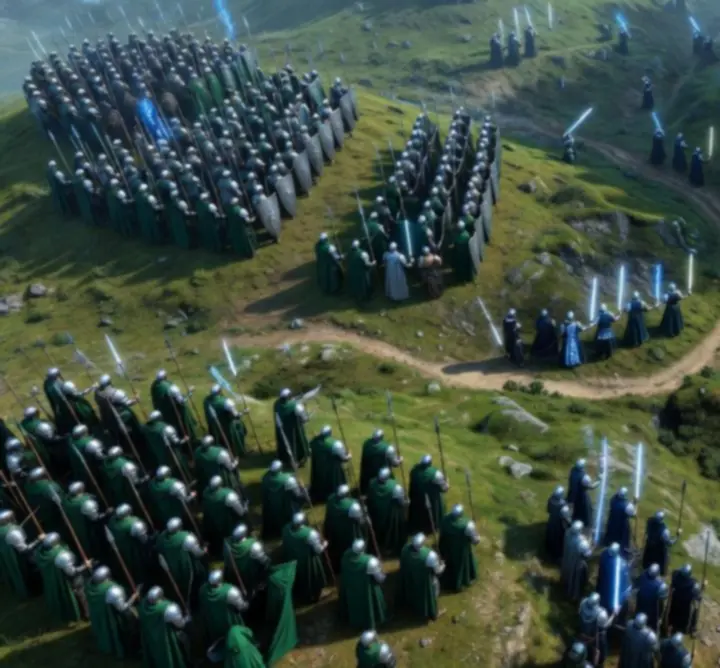
Overhead view of a tactical battlefield formation showing zone control and choke points in a fantasy strategy game
A disciplined formation locking down choke points and controlling the central combat lane—core to tactical gameplay in the Field Visionary fantasy world.

Vision and Fog of War

Use fog of war and scouting patterns to “see” the battlefield like a true Field Visionary.

Field Awareness Information Advantage

Reading the Map When You Can’t See It

Fog of war hides units, not intentions.

The game’s fog of war system rewards players who treat vision as a resource. In high-level play across the Hungary region, teams constantly trade cooldowns and positioning to secure vision over objectives instead of rushing blind into contested areas.

Think in terms of vision anchors—stable points that give reliable information about rotations and flanks. These may be towers, elevated ridges, or crossroads between jungle and lane.

  • Scouting routes: Use mobile or stealth-capable classes to draw looping paths that reveal both jungle entrances and lane crossings.
  • Safe checks: Never face-check high-priority bushes or corners. Use skills, summons, or ranged attacks to verify safety first.
  • Timing windows: Refresh vision before key objectives spawn; plan scouting missions 20–30 seconds ahead of major fights.

As a Field Visionary, you are responsible for translating scattered vision into a mental map of enemy intentions: if three opponents vanish from the top side, you should already be pinging possible objectives and adjusting your team’s formation.

Practical Vision Tips

  • Track enemy ultimates and crowd control; avoid walking into fog when key threats are off cooldown.
  • Use vision tools before invading enemy territory and before starting major bosses or map events.
  • Ping missing enemies early; this habit scales your entire squad’s map awareness.
Deep Dive: Maps & Exploration

Resource Management Essentials

Control mana, stamina, and morale to outlast and outplay opponents across both short skirmishes and long campaigns.

Economy of Power Long-Form Strategy

Mana, Stamina & Morale as Tactical Currencies

Every cast and sprint has a strategic cost.

Most fantasy strategy games focus on gold and items, but Field Visionary players understand that mana, stamina, and squad morale are equally decisive. These hidden resources shape when you can pressure, when you must reset, and how confidently your team engages.

Mana: Spell Economy

Burning all your mana to win a lane trade might look impressive, but if a neutral objective appears 30 seconds later, your team has lost the bigger battle. Cast with a budget in mind: reserve 30–40% of your maximum mana for possible objective fights.

Stamina: Mobility & Staying Power

Stamina-heavy classes excel at repeated skirmishes but suffer when forced into extended chases. In Hungary’s competitive queues, you will often see teams using stamina spikes to force tempo swings, then retreating before their bars drain below safe thresholds.

Morale: Invisible Momentum

Morale is partly mechanical (buffs, debuffs, ult synergy) and partly psychological. Securing early map objectives or clutch saves boosts team confidence, which translates to faster calls and cleaner execution. As a shot-caller, you can stabilize morale by celebrating good plays and quickly resetting after mistakes.

Efficient resource management turns your squad into a machine: every spell serves a purpose, every sprint has a destination, and every reset is timed to align with spawn cycles and rotation paths.

Actionable Checkpoints

  • Before starting an objective, verify that your casters have at least 60% mana and that your frontline isn’t stamina-starved.
  • After a won fight, weigh the morale boost against the risk of overstaying on low resources.
  • Coordinate itemization that supports your planned tempo—sustain items for long campaigns, burst power for fast skirmish play.
Mechanics: Resource Systems

Synergy of Classes in Team Play

Optimize party composition, class roles, and synergy strategies to dominate multiplayer battles.

Squad Design Team Synergy

Building Lineups with Tactical Versatility

Field every role with a purpose, not out of habit.

In a true multiplayer fantasy world, no hero operates alone. Winning squads in the Hungary region carefully combine frontline control, burst damage, sustained damage, and utility. The goal is not just balance but synergy—each class amplifying the others.

Core Roles

  • Vanguard / Tank: Initiates, absorbs damage, and locks down choke points.
  • Assassin / Skirmisher: Threatens backliners, punishes out-of-position enemies, and forces defensive cooldowns.
  • Mage / Artillery: Controls zones with area spells, shaping the battlefield before fights begin.
  • Support / Enchanter: Keeps allies alive, manages vision, and times game-changing ultimates.

Example Hungary-Favored Comps

  • Objective Control Comp: Durable vanguard, zoning mage, sustain support, and two flexible damage dealers. Dominates neutral bosses and map hotspots.
  • Pick Composition: Stealth assassin, burst mage, and hard-CC support. Ideal for catching enemies around fog of war pockets.

Evaluate your lineup by asking: Which fights do we want? Which fights do we avoid? A Field Visionary captain drafts not only for raw power but for the maps, objectives, and play tempo that match their preferred battle strategy.

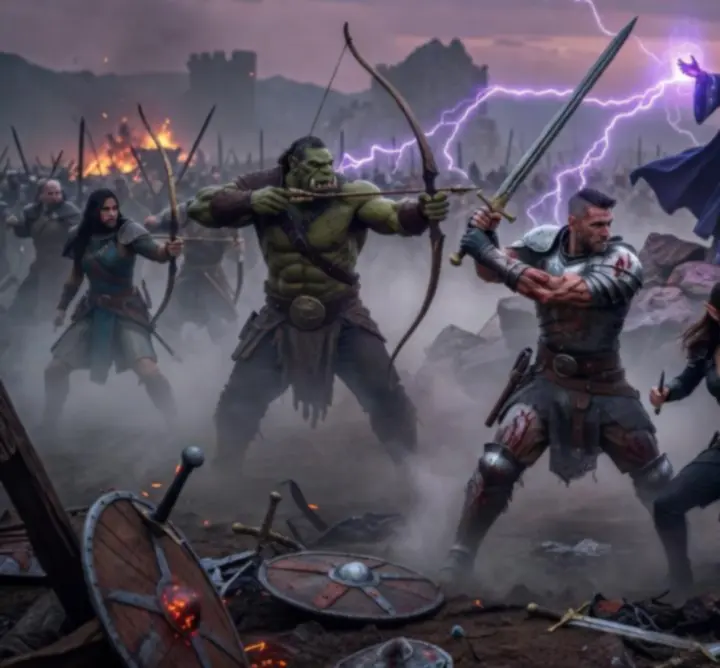
Fantasy characters of different classes combining abilities in a coordinated battle strategy
Coordinated class abilities creating layered crowd control and damage—the essence of tactical gameplay and high-level team synergy.

From Solo Play to Coordinated Squads

Transition from individual skill focus to full-team orchestration. Use our RPG guide insights to align roles, cooldowns, and win conditions.

Field Exploration for Strategic Gain

Use exploration to unlock hidden objectives, vision points, and terrain-based advantages.

Macro Play Map Discovery

Turning Curiosity into Concrete Advantage

Every unexplored path is a missed opportunity.

Exploration in a fantasy strategy game isn’t just about lore. It’s about harvesting actionable tactical data: where shortcuts lie, which ledges overlook major lanes, and which hidden paths allow safe rotations for your team.

  • Geographical advantages: Certain cliffs, bridges, or ruins amplify ranged classes or provide defensive bottlenecks.
  • Hidden objectives: Side shrines, resource caches, and roaming bosses often grant buffs that flip late-game fights.
  • Vision points: Elevated or central structures that reveal high-traffic corridors and jungle entrances.

In coordinated Hungary-region squads, one player frequently assumes the role of “scout captain”, mapping safe routes and calling when it’s time to invade or retreat. This player embodies the Field Visionary ideal: always thinking two rotations ahead.

Make exploration a structured habit. Dedicate quiet phases of the match to checking corners of the map you haven’t visited yet and sharing that information with your team.

Exploration Checklist

  • Identify at least three high-ground spots that overlook major objectives.
  • Learn one safe “backdoor” route to each lane for split-push or surprise rotations.
  • Track the respawn timers of minor camps that fuel mana, stamina, or buff resources.
View Exploration Maps

High-Level Strategies from Competitive Play

Analyze winning tactics from top Hungary-region players and squads.

Hungary Meta Tournament Insight

Flanks, Terrain & Ultimate Timings

Precision decisions under tournament pressure.

Competitive matches in Hungary reveal patterns that casual players rarely notice. Top teams prioritize flanking maneuvers, terrain exploitation, and perfectly layered ultimate skills to secure objectives with minimal risk.

Flanking Fundamentals

Instead of frontally charging objectives, high-level squads split into two or three squads: a main force that pressures vision and a flank group that waits in fog until the enemy overcommits. The moment opponents focus on the frontline, the flank cuts off their retreat.

Terrain Exploitation

Competitive players memorize tiny map features: ridges that block skill shots, pillars that break line of sight, and ramps that force enemies into single-file approaches. They fight only when the terrain favors their comp.

Ultimate Timing

Ultimates are treated as win-condition switches. Instead of using them reactively, captains call for synchronized ult combos when enemy defensive tools are on cooldown, guaranteeing maximum impact.

By reviewing tournament VODs and high-rank replays, you can import these techniques into your own ranked climbs and community events.

Apply Competitive Concepts

  • In scrims, practice single-focus drills: one match for flanks only, another just for terrain plays.
  • Create a “cooldown map” where you track enemy ultimates and key defensives.
  • Discuss win conditions in champion select, not mid-fight.
Follow Competitive Updates

Resource Control: Maps and Hotspots

Learn to dominate critical map zones where control delivers powerful bonuses and win conditions.

Objective Play Rotations

Timing Rotations Around High-Value Objectives

Every hotspot is a clock you must learn to read.

Hotspots are areas where experience, gold, buffs, or strategic vision converge. They include boss pits, shrines, vision towers, and crossroads that connect multiple lanes. Field Visionary players treat these not as random fights but as scheduled events.

  • Pre-setup: Arrive 20–40 seconds before spawn to clear vision, push nearby lanes, and secure flanking angles.
  • Control tools: Reserve slows, walls, and knockbacks specifically for contesting the choke points around the hotspot.
  • Exit plans: If the fight goes wrong, know in advance whether you will reset to nearby camps, fallback towers, or an alternate objective.

Rotations are the arteries of your macro play. When you push a lane, take a camp, or secure a shrine, you should already know the next two steps. This forward planning is what makes the Field Visionary label more than just a name.

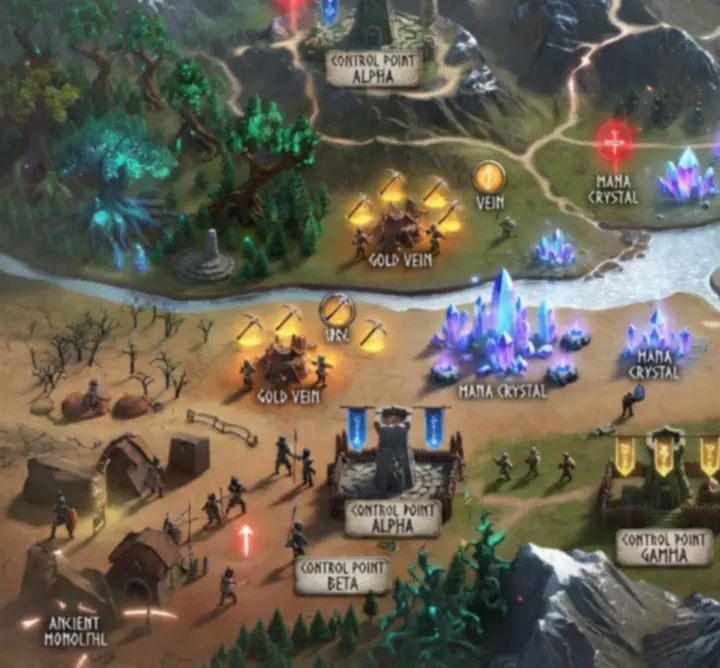
Strategic fantasy map highlighting key objective hotspots and vision zones
Key hotspots on the fantasy battlefield map, guiding objective control and team rotations for optimal battle strategy.

Map Mastery as a Competitive Edge

Invest time into learning objective timers, spawn paths, and how hotspots interact with your preferred compositions.

Adapting Strategies: Dynamic Opponent Responses

Master the art of reading enemy patterns and shifting tactics between offense and defense.

Dynamic Play Mind Games

From Game Plan to On-the-Fly Adjustments

No strategy survives first contact without adaptation.

Pre-game plans are essential, but a true Field Visionary captain excels at adaptation. This means observing enemy patterns and rewriting your priorities mid-match when necessary.

Pattern Recognition

Notice where opponents spend most of their time. Are they overcommitting to one lane? Do they always start objectives on spawn? These patterns reveal openings for cross-map trades or ambushes.

Switching Between Offense and Defense

If your squad loses several early fights, shift into a defensive vision and wave-clear pattern, trading small objectives for guaranteed farm and safety. When the enemy overextends to push their lead, pivot into decisive counter-engages on your terms.

Micro and Macro Adaptation

  • Micro: Adjust target focus, positioning, and spell priorities based on enemy items and cooldowns.
  • Macro: Swap lane assignments, change which hotspots you contest, and delay risky bosses until you have item spikes.

Dynamic adaptation is where tactical gameplay becomes an art form. It demands clear communication, a shared understanding of win conditions, and the courage to abandon a failing plan in favor of a better one.

Practice Adaptive Thinking

  • After each match, review one moment where a different call could have changed the outcome.
  • Scrim with “restricted plans” where you intentionally practice comebacks, stall tactics, or split-push responses.
  • Use VOD reviews with your community to identify predictable patterns and new adaptation lines.
Share Strategies with Players

Advance Your Command of the Field

Use these guides as a launchpad: combine tactical positioning, fog of war mastery, disciplined resource management, and adaptive class synergy to define your legacy in this multiplayer fantasy world.